
Criminal Court Cases in Seminole County
Seminole Superior Court is the county's general-jurisdiction court and the trial court for felonies. It belongs to the seven-county Pataula Judicial Circuit. The regional calendar may contain matters from Clay, Early, Miller, Quitman, Randolph, Seminole, and Terrell counties, so confirm both the county and case number before relying on a result. Clerk of Superior Court Earlene Bramlett maintains the local Superior Court docket, accusations and indictments, judgments, sentences, and certified copies.
Not every criminal matter starts or ends in Superior Court. Seminole Magistrate Court issues arrest and search warrants, conducts first appearances, bond and preliminary hearings, and hears specified misdemeanors and county ordinance cases. Probate Court handles traffic and game-and-fish matters and can perform warrant and commitment functions. Donalsonville Municipal Court keeps city ordinance and fine-only matters. A blank Superior Court search therefore does not prove that no local case exists.
Seminole County Court Map
The courthouse complex at 200 South Knox Avenue in Donalsonville is the practical center for Seminole County criminal case records. The clerk's official profile says the office manages Superior, Juvenile, and Magistrate records from 8:00 a.m. to 5:00 p.m. weekdays. Juvenile records remain restricted, even though the same clerk manages them.
The official Magistrate Court page shows where warrant, bond, and preliminary-hearing records begin.
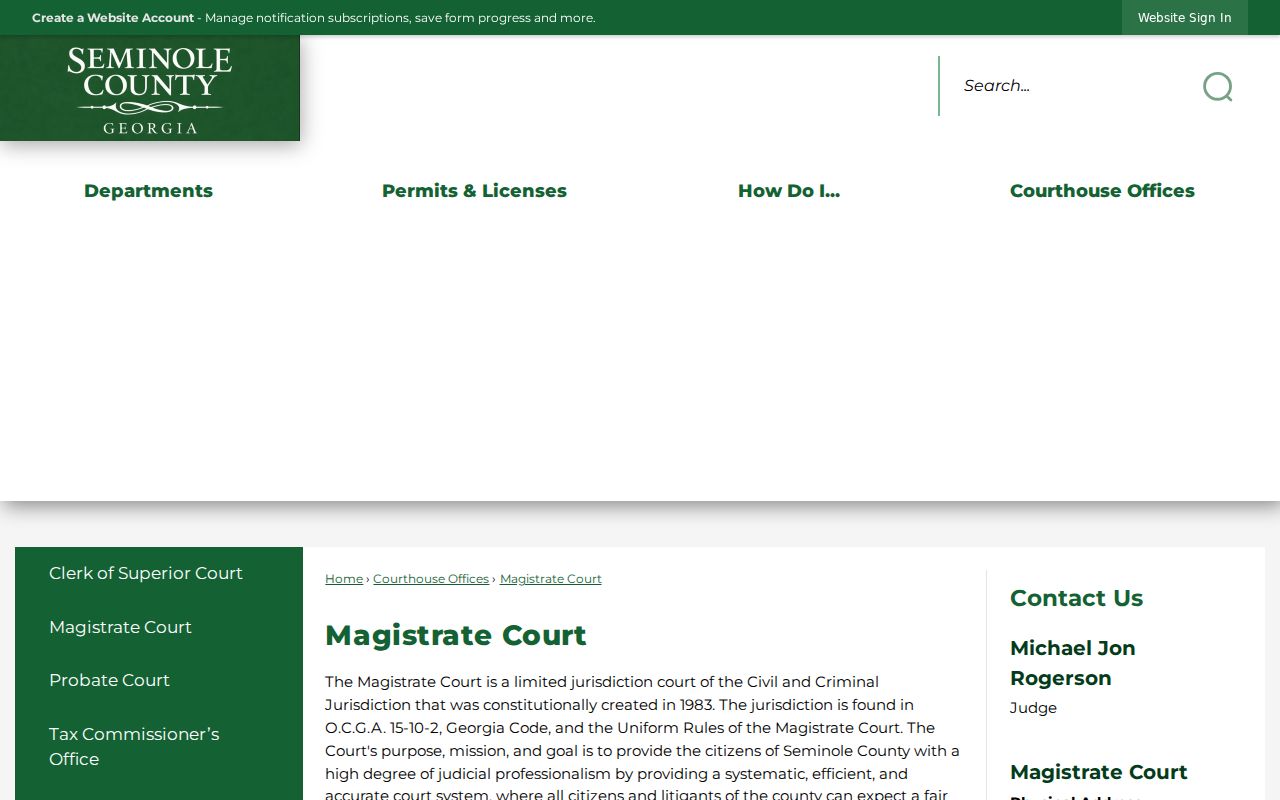
This county page helps route a reader to the limited-jurisdiction record instead of treating every filing as a Superior Court case.
The Seminole County Probate Court page identifies its traffic, game-and-fish, and warrant functions.
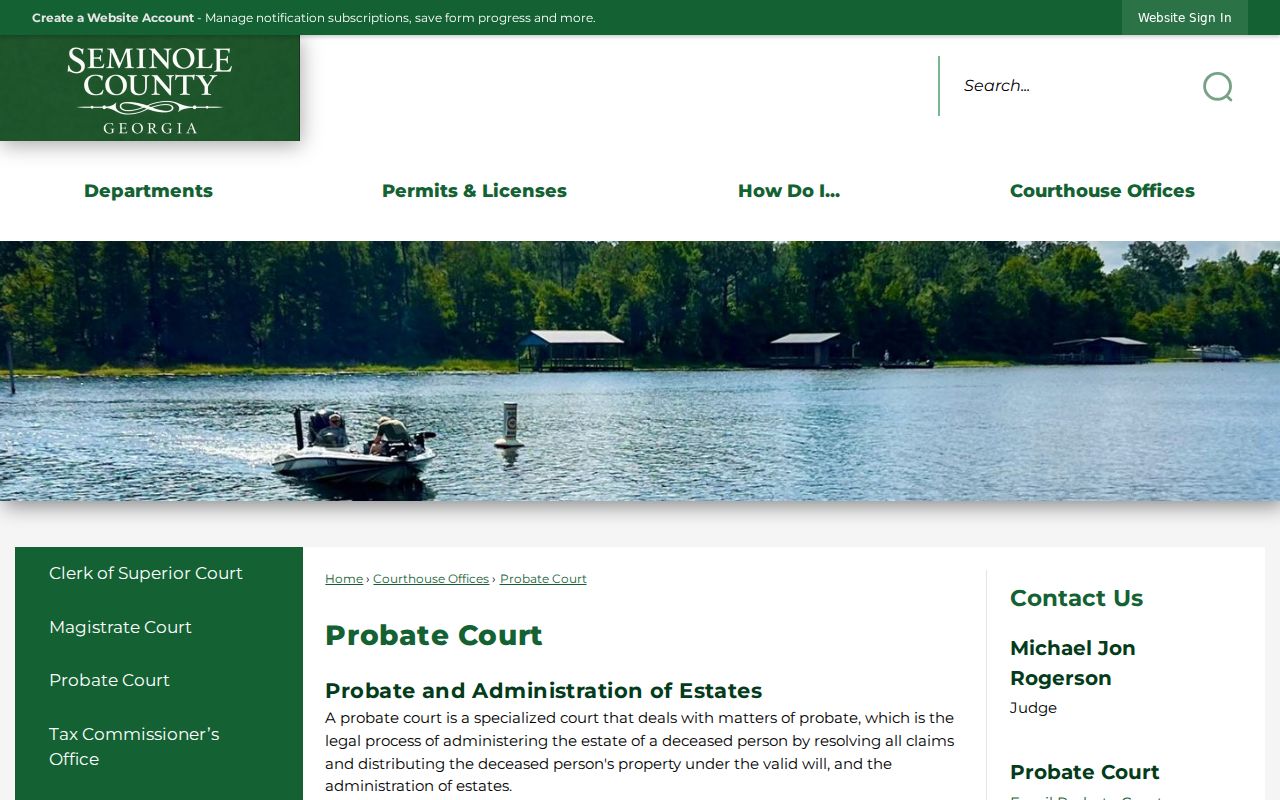
The published office details provide a second path when a citation or commitment matter does not appear in a felony docket.
Seminole County Case Record Searches
Georgia Judicial Council's E-Access to Court Records directory lists Seminole Superior Court, but it redirects users to a provider that requires an account. It is a gateway, not a single free statewide criminal docket. PeachCourt is mandatory for Superior Court e-filing, yet filing access does not mean that every document can be viewed by the public. Use the clerk when the provider omits an older scan, sealed entry, or final document.
- Open Georgia E-Access and choose Seminole Superior Court.
- Follow the provider link, create the required account, and select the criminal division if offered.
- Search by case number or party name, then confirm Seminole County, filing year, court, and judge.
- Read the charge and event lines through the final disposition rather than stopping at the first filing.
- Call the clerk at 229-524-2525 for the docket sheet, missing documents, costs, or a certified disposition.
| Field Label | Type | Required | Notes |
|---|---|---|---|
| Party name | Text | Provider dependent | Try legal spelling and known variants. |
| Case number | Text | Provider dependent | Best key for avoiding a common-name mismatch. |
| County and court | Selection | Confirm | Choose Seminole and the correct court. |
| Filing year | Date or filter | No | Narrows repeated names and archived matters. |
| Case type or status | Selection | No | Use criminal and check whether the case is open or disposed. |
Seminole County Clerk Fallback
When remote access fails, ask the clerk for the criminal index by full name, spelling variants, approximate year, and case type. Request the docket sheet and final disposition before ordering an entire file. That smaller request often identifies whether the desired item is an accusation, indictment, plea, judgment, sentence, or revocation entry. Ask whether inspection is free and obtain an estimate for copies or certification because the official research did not locate a published local fee schedule.
The official Seminole clerk profile confirms the courts managed and public office hours.
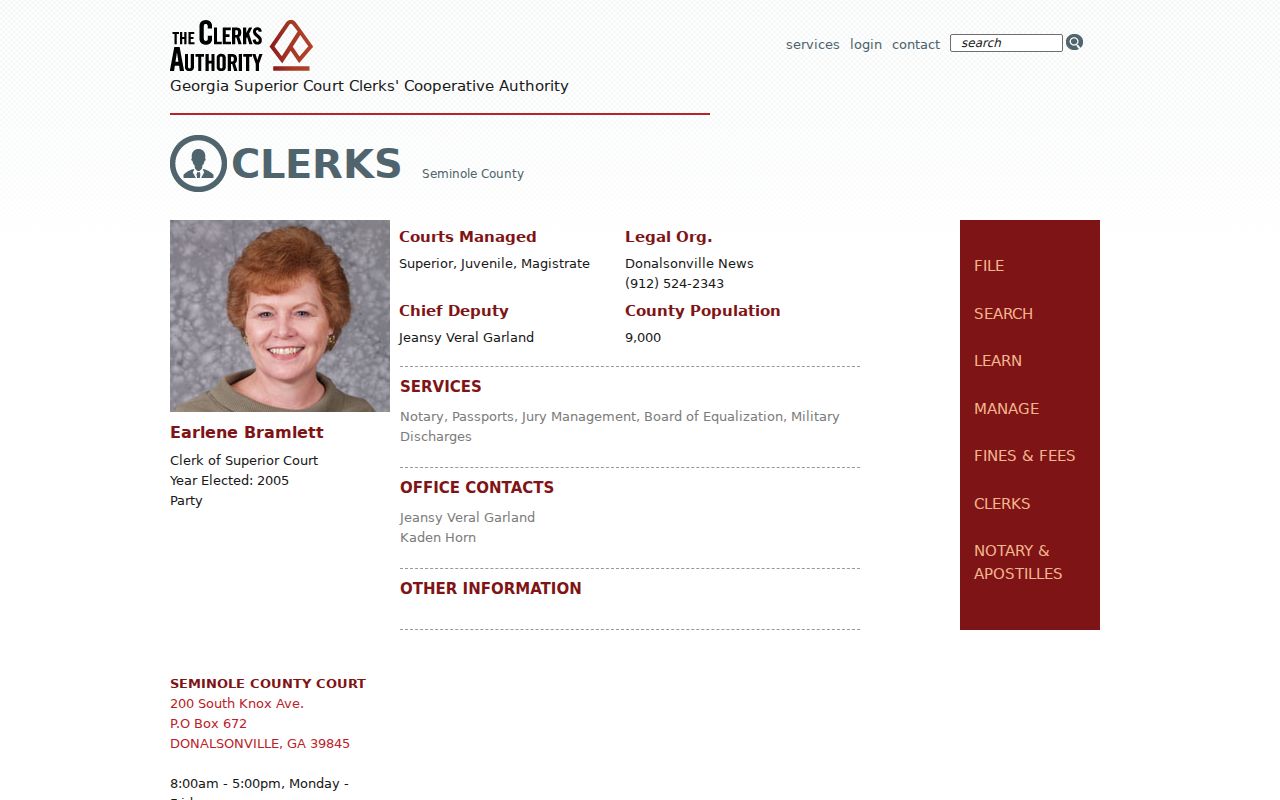
That profile supports direct counter access for files that the account-gated provider cannot supply in complete or certified form.
What a Criminal Case File Contains
A Seminole County case file follows the charge after it reaches a court. Its header identifies the county, court, number, filing date, type, status, and judge. Party and attorney lines identify the State of Georgia and defendant. Charge rows can give the offense description, citation, felony or misdemeanor level, and count. Event entries show what happened and when. The judgment and sentence provide the best evidence of the result.
| Case Number & Court | Unique file key, venue, division, filing date, status, and assigned judge. |
|---|---|
| Charging Document | Complaint, accusation, or indictment stating the filed counts. |
| Docket Entries | Indexed warrants, motions, notices, pleas, hearings, trial, and revocation activity. |
| Bond | Published amount or type, bond order, and later modifications. |
| Disposition & Judgment | Conviction, dismissal, nolle prosequi, acquittal, or First Offender handling and date. |
| Sentence & Conditions | Confinement, probation, fines, costs, and public special conditions. |
Reading Seminole County Dispositions
A docket is chronological. An accusation or indictment states the prosecutor's filed charge, which may differ from the booking charge. “Nolle prosequi” means the prosecution chose not to proceed on that count. A dismissal is not a conviction. An acquittal follows a not-guilty result, while a guilty plea or verdict leads to judgment and sentence. First Offender treatment has its own legal effect and should not be reduced to a simple conviction label.
Read each count separately. One arrest cycle can produce several charges with different outcomes. If the online index ends at a plea or hearing, ask for the signed final judgment. The broader Seminole County criminal history overview explains why GCIC can lag behind the court's certified result.
Criminal Case Stages in Seminole County
A case record develops in stages. Magistrate Court may hold the first appearance, address bond, and conduct a preliminary hearing. The prosecutor then files an accusation or seeks an indictment for a Superior Court case. Arraignment records the plea. Pretrial motions resolve evidence and procedure. A negotiated plea or trial leads to disposition, followed by sentencing when required. No fixed local timeline was published, so use docket dates rather than assuming how long a stage should take.
Case flow: Charges Filed › Arraignment › Pretrial › Plea or Trial › Disposition › Sentencing
When a Seminole Case Is Missing
First verify the court. A warrant, traffic case, city ordinance matter, or preliminary hearing may be held outside Superior Court. Next check name spelling, filing year, and county. The Pataula Circuit's regional structure makes the county field vital. Then call the clerk with the case number if known. Older files, scanning gaps, juvenile confidentiality, sealing orders, and provider account limits can all explain a blank online result.
A recent arrest may also precede a filed court case. In that situation, confirm custody and booking with the sheriff, then return to the court index after the prosecuting authority files charges. Do not infer dismissal solely from a missing remote entry.
Archived paper files and uncertified online summaries require different requests. Tell the clerk whether the goal is inspection, an ordinary copy, or a certified copy. A docket sheet may answer the status question at lower cost than ordering every motion and notice. If a document is sealed, ask whether the public index can still confirm the case number and existence of the sealing order.
Seminole County’s Regional Defense Files
The Pataula Circuit Public Defender serves Seminole County from a regional office rather than a Donalsonville satellite. That arrangement does not move the official court record. Pleadings accepted by the court, docket entries, judgments, and sentences remain with the Seminole County clerk even when counsel works from elsewhere in the seven-county circuit. A defense office file may also contain privileged material that is not part of the public docket.
The official Pataula Circuit Public Defender page provides the application and office route. Ask the clerk for filed court documents and the public defender only about its own representation process. Keeping those roles separate avoids sending a public-record request to an office that does not hold the requested court file.
Access Rules for Case Records
Georgia court records are generally open, but access is subject to judicial rules and sealing orders. Juvenile matters, restricted or sealed records, protected victim information, medical identifiers, and confidential material may be hidden or redacted. An executive-agency request under the Georgia Open Records Act is not a substitute for the clerk's court-record process. Ask the clerk which rule or order controls an unavailable item.
Online access can be narrower than access at the counter. An index may show that a document exists without providing its image. Certification is also a clerk function. When a record will be used to understand an outcome or correct another agency's entry, obtain the certified final disposition rather than relying on a screen summary.
Call ahead for an older file or a document that requires staff retrieval. Give the clerk the court, case number, party name, and approximate year. Ask for an estimate before ordering a full file and confirm whether the requested copy must be certified.