
Seminole County Sex Offender Checks
The GBI administers the Georgia Sex Offender Registry and SORT. County sheriffs perform local registration under O.C.G.A. §42-1-12. Search the state tool first, then contact the Seminole County Sheriff's Office at 208 Court Street, 229-524-5115, about a suspected address or compliance issue.
The registry is free but is not a complete list of every sexual offense or every person who may pose a risk.
Georgia Sex Offender Registry Searches
The GBI registry gateway requires acceptance of its conditions and CAPTCHA before search.
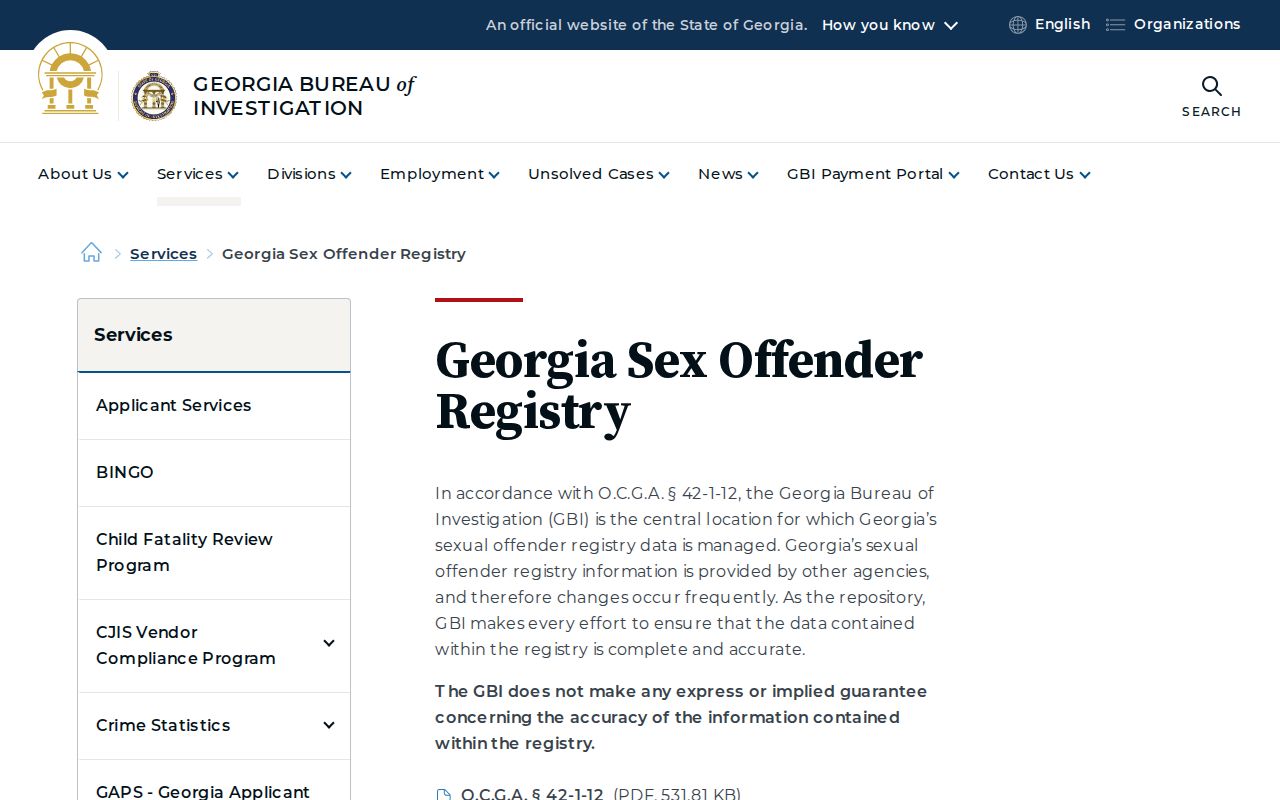
The gate reinforces the public-safety purpose and misuse rules.
- Accept the conditions and complete CAPTCHA.
- Search by name, city, ZIP, address, or Seminole County.
- Compare name, aliases, photo, description, and address.
- Open the profile and read offense, classification, and status.
| Field Label | Type | Required | Notes |
|---|---|---|---|
| Last name | Text | No | Try known spellings and aliases. |
| First name | Text | No | Combine with surname when known. |
| City or ZIP | Text/select | No | Use Donalsonville, Iron City, or ZIP. |
| County | Select | No | Choose Seminole County. |
| Address or radius | Location | No | Use available live proximity controls. |
Registry Profiles: What They Show
Public profiles combine identifying, location, offense, classification, and compliance fields. Read the source jurisdiction with the name.
| Name & Aliases | Primary and reported alternate names. |
|---|---|
| Photo & Physical Description | Public image and identifying traits. |
| Registered Address | Published residence and other required locations. |
| Offense & Statute | Qualifying offense, jurisdiction, and citation. |
| Level | Georgia risk classification. |
| Registration Status | Compliance, verification, or absconded data when shown. |
Registration Levels and Duties in Georgia
Georgia uses Level I, Level II, and sexually dangerous predator classifications, not SORNA tier labels. Lifetime registration is the baseline, subject to narrow court petition routes. Required information changes generally must be reported within 72 hours.
| Level / Tier | Duration | Verification Frequency |
|---|---|---|
| Level I | Lifetime baseline; petition may apply | Statutory and sheriff schedule |
| Level II | Lifetime baseline; petition may apply | Statutory and sheriff schedule |
| Sexually dangerous predator | Lifetime baseline | Enhanced statutory duties |
Using Registry Information Lawfully
The public registry supports awareness and lawful safety planning. It does not authorize threats, harassment, vigilantism, trespass, or discrimination. Report suspected noncompliance to the Seminole County sheriff and let law enforcement verify the facts.
Misuse is prohibited: O.C.G.A. §42-1-12 states that using registry information to commit a criminal act against a registrant or household member is a crime.
Missing Seminole Registry Results
A blank Seminole County filter does not prove that no relevant record exists. A move or new registration can take time to appear. The county filter may be wrong, a name may be listed as an alias, or the person may be registered in another state. Search without the county limit, try known spellings, and compare the name with photo and physical details.
The GBI registry FAQ explains omissions, movement, duration, and removal rules.
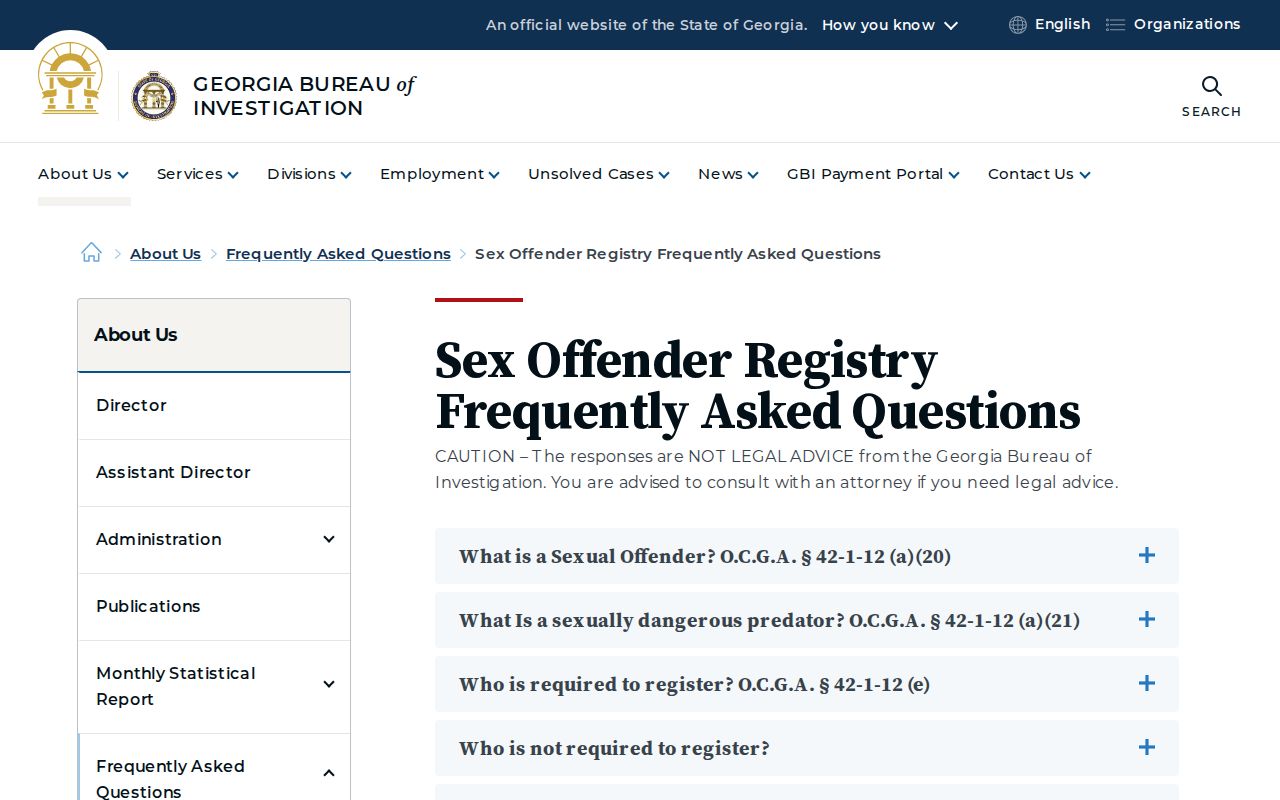
Successful First Offender treatment and a qualifying removal order can also explain why an expected public profile is absent.
Seminole Registry and NSOPW
The Georgia registry is the primary source for a Seminole County search. When a person may have lived outside Georgia, add the National Sex Offender Public Website. NSOPW searches participating public registries across jurisdictions, but the originating state profile remains the source to confirm a match and read current details.
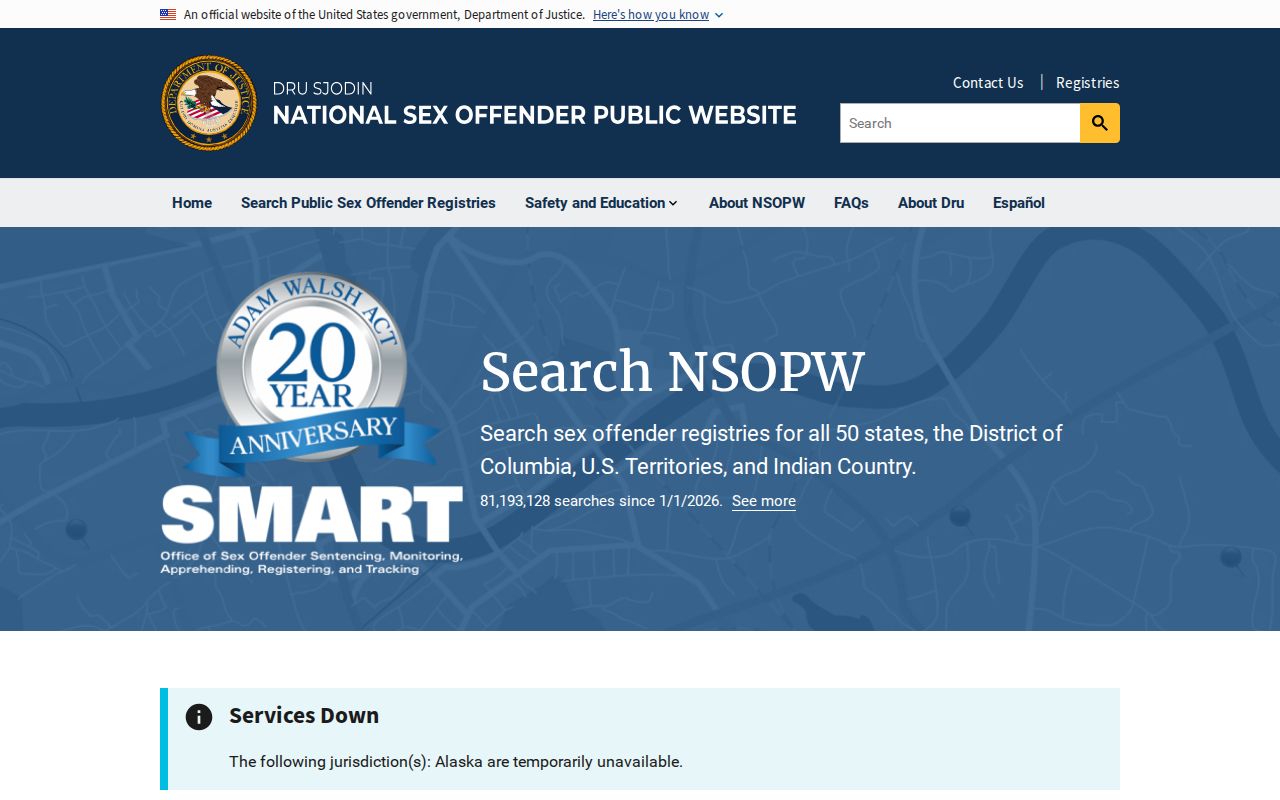
The two layers complement each other. Neither should be treated as a promise that every person who presents a risk will appear.
When NSOPW returns a possible match, open the linked state or tribal source. Compare the current jurisdiction, aliases, photograph, physical details, and offense information. A national result can point to the correct registry, but questions about a Georgia address still belong with GBI and the Seminole County sheriff.
Seminole Sheriff Registration Role
Georgia centralizes the public tool at GBI but assigns registration work to county sheriffs. The Seminole County Sheriff's Office is at 208 Court Street in Donalsonville and can be reached at 229-524-5115. Official research did not locate a separate registry-unit name, officer schedule, or special public counter hours. Call before visiting and ask for the person who handles sex-offender registration.
Registrants generally must report required changes within 72 hours. A member of the public who sees a possible wrong address should preserve the public profile details and report the concern to the sheriff. Do not confront the person, enter private property, or conduct a private compliance check. The sheriff can compare the report with information that is not displayed publicly.
Georgia Risk Levels Explained
Georgia's Level I, Level II, and sexually dangerous predator labels are risk classifications. They are not the federal SORNA Tier I, II, and III scheme, and they should not be treated as a simple ranking of the conviction's name. The Sexual Offender Registration Review Board classification process and the criminal court judgment answer different questions.
Lifetime registration is Georgia's baseline. O.C.G.A. §42-1-19 provides limited petition routes for release, but eligibility and a court order are required. Removal is not automatic merely because time passed. Check the live GBI profile and the governing order rather than assuming that an old conviction must still produce a public entry.
Seminole Address and Work Duties
The public profile may show residential, employment, school, or volunteer information when required and available, plus vehicle, offense, and verification details. Georgia law also imposes location restrictions in defined circumstances. The registry is the place to read the published address, but it does not decide property boundaries or resolve a legal dispute about a specific location.
Contact the sheriff for a suspected reporting violation. For a legal interpretation of residency restrictions or a petition for removal, use the court process and qualified counsel. Public users should limit their role to accurate community awareness and lawful safety planning.
A profile's published address is a reporting field, not an invitation to visit. Use it to make ordinary family safety plans and to understand the area around a home, school, route, or community activity. If an entry appears stale, preserve the profile URL and the specific discrepancy. Give that information to the sheriff without posting accusations or private household details elsewhere.
Verification dates and status terms should be read literally. “Absconded” or a similar status needs prompt official attention, while an old photo by itself does not establish noncompliance. The county sheriff and GBI have access to the reporting system and can determine whether an update is pending or a violation investigation is warranted.
Read Seminole Profiles Carefully
Start with identity. Compare aliases, physical description, photograph, and date information before treating a name match as the correct person. Then read the qualifying offense, conviction jurisdiction, and registration status. A risk label is not a substitute for those details. If the profile links to more than one address or role, note whether the field describes residence, work, school, or volunteer activity.
Public fields can change as GBI and the sheriff receive reports. Capture the date of the search when documenting a safety concern. Return to the live registry instead of relying on a saved screenshot weeks later. The live source is also the right place to see any current warnings, conditions of use, and explanatory notes attached to the result.
Use the profile as one part of a safety plan. Ordinary precautions, direct communication with schools or caregivers, and official law-enforcement reports remain important. Registry data should not become rumor, a public accusation, or a reason to contact a registrant's family. The conditions of use apply to every search, even when the initial concern is sincere.